Tag Archives: Review

Throwback Review: Spectacular Spider-man #3


I’ve been a dedicated Spidey reader since 1990. That’s 26 years of adoration for one of the most colorful characters ever put to print. And I’ll openly confess that I cannot for the life of me remember the villain, Lightmaster. Maybe this guy was a, pardon the pun, flash in the pan, but maybe I’m wrong and issue three of Spectacular Spider-man will rekindle some memories or answer my little burning question: who in the world is Lightmaster?

Continue reading Throwback Review: Spectacular Spider-man #3

Junji Ito’s ‘Uzumaki’ Review


Written by: Adrienne Clark

Something is wrong in the town of Kurozu-Cho. Kire hasn’t noticed anything, but her boyfriend, Shuichi, is convinced that there is an evil in the town. It’s making him dizzy. He’s convinced; the town is infected with spirals.

Shuichi isn’t the only one who’s obsessed with spirals. His father has amassed a huge collection of spiral objects and sits and stares at them for hours. That is, until his wife throws it all away in an attempt to rid him of his obsession. Kire and Shuichi look on as Shuichi’s father screams at his mother. How could she do this? Then suddenly his mood changes. He doesn’t care about his collection because he says he can express the spiral through his body. And express it he does, by spinning his eyes separately in their sockets. Two days later, they find him dead, his body disfigured, coiled into a back-breaking spiral.

Uzumaki Manga Horror Comic

Thus begins the most quietly disturbing comic I have read to date.

Uzumaki by Junji Ito is an unexplained horror that chills even as you don’t understand it. The back cover calls it “terror in the tradition of The Ring” and yet I don’t see it as a fair comparison. I’ve never read the Koji Suzuki novel, but I have seen the films, and The Ring reads as a straightforward narrative. This story moves in, well, spirals.

This comic is all twists and turns without much narrative explanation. Uzumaki draws you in, pulling you along through unspeakable terrors, and then, just as you begin to think you understand the infection at the core of this story, Ito changes the scope. The town’s spiral infection is both mental and physical, internal and external, and seems almost personal in its manifestation. Some characters evolve physically, changing shape until their outsides reflect the spiral. Other characters devolve into madness, narcissism, and cannibalism.

The only rule, it seems, is that there are no rules.

This is Uzumaki’s greatest achievement. When a reader has no chance of understanding what’s possible then every moment is filled with terrifying potential.

And yet, the horror is balanced by the sheer beauty of the images created. Yes, they are disturbing, but you can’t look away. A woman’s hair curls and spirals upward, creating a mesmerizing and oppressive vision everywhere she goes; star-crossed lovers entwin their bodies until they are a distorted monster. These images are the driving force of Ito’s creation, and they are horror perfection.

The narrative moves along, stopping to explore smaller stories and ideas inspired by the idea of spiral infection. One of my favorites follows Kire in the hospital. While recovering from a previous horrific adventure, she uncovers a coven of pregnant women who are drinking blood, recently born babies physically infected with the spiral, and what exactly the “mushrooms” are made of in the hospital meals. I rarely express myself out loud while reading, but this sequence was an exception.

These small tales are often simple in their scope and are not always cumulative toward the larger narrative. The overall focus of the series is to watch our characters struggle as they try to escape their infected town, but many times a single issue will simply exist without any indication of how it fits in with the larger arc. These issues build a strong sense of place and verisimilitude. This world is not one of a singular horrific event, this is a world where horror is woven into every waking moment. An everyday occurrence like brushing your hair can suddenly warp into an unimaginable, life-changing situation. There is no warning and just when you think that you’re safe–well you know how it goes.

At only three books long, this beautiful manga was over too soon. But the images won’t soon leave my mind. And isn’t that the goal with horror? If you can leave the viewer with a perspective-changing image, you’ve won.
Infect your world with Uzumaki. I promise you’ll be glad you did.

Get it here.

Rating: 5/5

Uzumaki horror manga Junji Ito

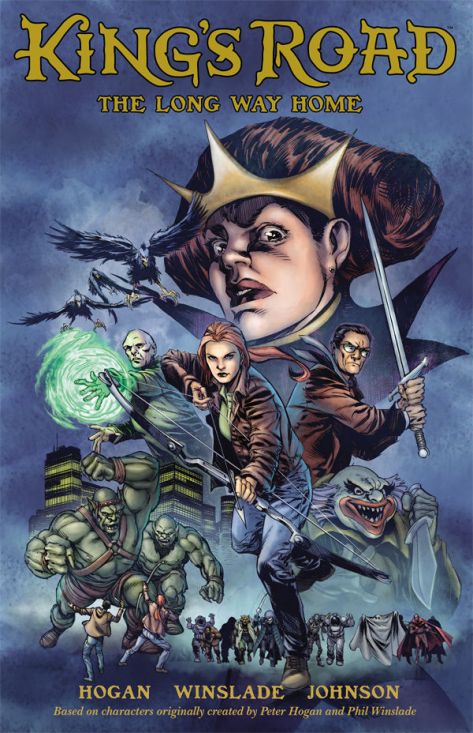
‘King’s Road: The Long Way Home’ (Review)


I can’t read more than 20 or 30 pages of a fantasy novel, but when you put that story on a page with magnetic illustrations, and you gift these unique creatures varied appearances, my interest level rises, significantly. After just five pages or so, I knew I’d be reading King’s Road: The Long Way Home in a single sitting, eyes straining as I stare at a five inch cellphone screen.

The read justified the strain on the eyeballs, and I’ve got no regrets having tuned out the world around me in order to be sucked into a fantastical world where heroes and beasts call the same landscape home. Not that we spend much time in any magical lands of any sort. No, this story takes place here on earth, but King’s Road is a story that hasn’t met its conclusion, and though I’ve not been familiar with the title prior to today, it’s very obvious that an alternate reality will force the story’s protagonists to return to a realm I’ve yet to see.

Peter Hogan manages to tell a story that is both fast-paced and slowed for consideration of those who may not be familiar with any of this fantasy brouhaha. His story is straight forward, and his characters are all likeable – even a vile “queen” who rules a universe under shady and sinister methods. In fact, she didn’t just land the gig of a universe, the treacherous traitor ambushed the king, who just so happens to be the brother of the story’s hero, and rightful king to a still unknown kingdom.

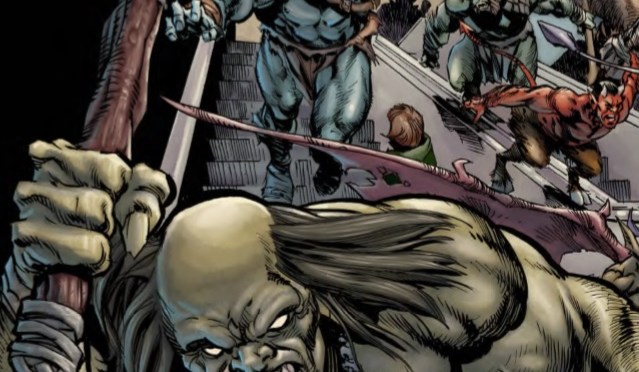
Loaded with action, it’s impossible to do anything outside of admire the work of artists Staz Johnson, and Phil Winslade who create some nasty beasts with which our heroic family must tangle. What’s even more impressive is that somehow, all of these morbid monsters – cyclops, trolls, and winged freaks of nature – fit comfortably in our own world. An army of monsters doesn’t even look out of place at a strip mall. That’s excellent work from Johnson and Winslade, and it’s all held together by Peter Hogan, who’s created something extremely special here.

I never thought I’d say it, but I can’t wait to read more of King’s Road!

You can look into the single issues, or the trade paperback, right here.

Rating: 4/5

kings road cover

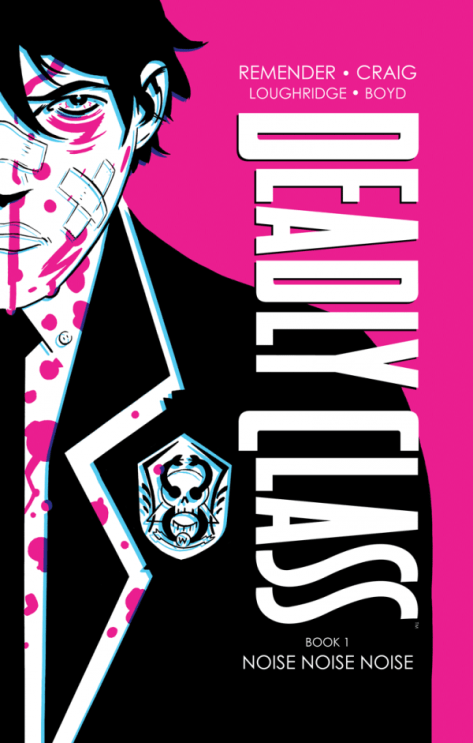
Deadly Class Book 1: Noise Noise Noise (Review)


If the X-Men all got together, hammered some cool beverages, “accidentally” stumbled into free rooms and bumped uglies, subsequently pumping out little Suicide Squad babies, you’d have an uglier rendition of Deadly Class (Book 1). And, as insane as that sounds, it really is kind of accurate.

This sprawling story focuses on an assortment of troubled teens who find themselves recruited into a private school (complete with an ancient cousin of Professor X), far off the radar. This school isn’t designed to help your reading, writing and arithmetic however, this is school is designed to turn rogues into highly skilled professional assassins.

It’s an insane concept to work with, and although the book borrows a few ideas from a few major titles, Rick Remender’s narrative is infectious, complex and unique enough to suck readers into the morbid vortex inhabited by youthful assassins. With each page that passes in this beautiful collection only becomes more curious, until the answers finally begin trickling in, and readers are left to assemble a few severely damaged lives.

At the heart of this top notch piece is a somewhat simple coming of age tale, and I love that about it. Don’t get me wrong, the violence and brutality of the book is gratifying, but the more personal elements are where the magic really lives. The love, the loss. The loyalty, the betrayal. These are things we’ve always dealt with in the real world, and they’re issues that make up a prominent slice of a teenager’s life.

Wes Craig’s artwork is excellent, often mixing up clean, precise images with frantic illustrations to further enhance Remender’s story. The two work well together, and the book is nothing short of absolutely magical.

Highly, highly recommended!

You can look into it right here.

Rating: 5/5

DeadlyClassBook_01-1

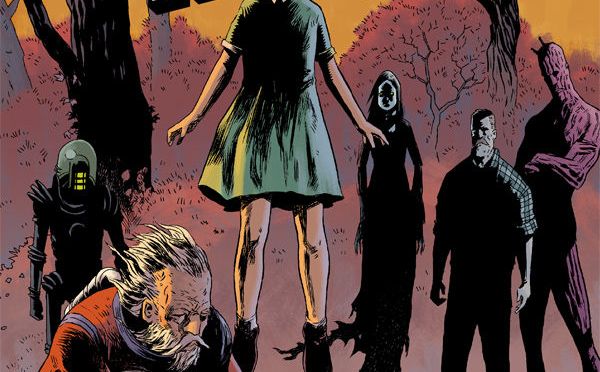
Black Hammer #1 Review


I can’t praise Jeff Lemire enough for what is nothing shy of an immediately captivating tale of sacrifice and heart ache, isolation and frustration. It’s about life in exchange for death. It’s about fallen heroes, all but forgotten by a world that once loved them. It’s about The Black Hammer, the one who gave his life so that Abraham Slam, Golden Gail, Barbalien, Colonial Weird, Talky Walky, and Madame Dragonfly could continue to live… continue to breathe.

This is a tale about a young woman, once proud to be the daughter of the Hero of the Streets, and her mission to find those heroes long forgotten. For she knows, in her heart, that they’re out there… somewhere.

Dramatic enough for you?

Honestly, Black Hammer is an amazing book that instantly pulls the reader into a world occupied by polarizing and infectious personalities. Their conflicts are unique but united as a group. Their opinions on their state of existence differ, but there’s a familial beauty to this group that leaves us comic geeks falling in love. It’s an amazing piece of work.

Dean Ormston’s artwork is also perfect. A throwback to a simpler age, Ormston’s got variety in his hand, but he’s decorated this story the way it should be, the way a 50s science fiction film might look on page. And in some ways, that’s kind of what the story is: a science fiction experience lived by a handful of heroes of no use today, trapped in a one horse town with little to do… other than survive.

Lemire, coupled with Ormston deliver what has to be recognized as one of the most inspired Dark Horse titles to ever see release. Ever. That’s a powerful statement, but you don’t find the perfect book very often.

Look into issue #1 of Black Hammer right here.

Rating: 5/5

26732


Michael Moreci and Steve Seeley’s ‘Hack/Slash: Son of Samhain’ Review


Written by: Adrienne Clark

I hadn’t read all of Hack/Slash before reading this story line. Many of the Hack/Slash stories are one shots (a stand-alone issue with a story that isn’t part of an ongoing series) so it’s usually not necessary to have read every previous story. Son of Samhain (story by Michael Moreci and Steve Seeley) followed suit as a stand-alone mini series; however, you would do well to be at least somewhat familiar with the series when you dive in.

Let’s do a quick run-down of the 5-part plot.

Book 1
Cassie Hack is hiding from herself by working as a bounty hunter. In a former life she hunted a different kind of prey–monsters. When another infamous monster hunter named Delroy tempts her out of retirement, they find themselves in Mexico uncovering a monster (no pun intended) plot to bring to life the God, Attan-Soolu.

The perspective toggles back and forth between our monster-hunting heroes and Morinto, the leader of a group of monsters who spends most of his time waxing poetic about the plight of monsters. Humanity defeated them centuries ago and drove them underground. Now, Morinto is building an army to return to the surface and take it back

The climax comes when Hack and Delroy discover a mysterious kid being held captive by the monsters. The hunters fight to free him. He returns their bravery by biting Hack’s arm and running away.

Book 2
Morinto confronts the mythical god beast, who has been made only to destroy, and listens to no one but Attan-Soolu. Fortunately, Morinto has perfected his brain-controlling bugs. With no effort at all, Morinto conquers the beast. Now the god beast believes Morinto is Attan-Soolu and will what whatever this monster leader wants.

Hack and Delroy track the mysterious boy that ran away. It turns out that he has a murderous streak as well. His name is October (Ocky for short), and Hack comments on how familiar he looks.

Book 3
Hack and Delroy take a moment away from monster hunting to discover more about Ocky’s past. It turns out there is a reason he looks so familiar to Hack.

Morinto’s past is revealed. It turns out that his mother was a member of an occult organization called the Dark Order. When she passed she prayed to have her powers passed to her son. Between this gift of dark power and the god beast, Moritno is able to build the monster army he needs to go to the surface.

Book 4
The battle is on between our hunters and the monster army. While Hack fights to survive against Morinto’s mind control bugs, Delroy takes on the god beast all on his own. That’s all I can say without spoilers so, on to…

Book 5
Hack and Ocky (seriously, has there ever been a less intimidating nickname?) take a moment to reflect on whether they should return to the battle or make a run for it. They know what choice they have to make, and once they do, they hatch a plan to send the murderous monsters back beneath the surface. But, can evil ever really be defeated?

Our heroes drive off into the sunset even as a new threat begins to take form.


This fun, if somewhat basic, story puts the classic “Hero’s Journey” structure to good use. It leans heavily on the reader’s familiarity with the classic structure. This way the story can focus on action rather than character development.

The characters are delightfully simple in both their motivations and their dialogue. I say delightfully simple because that is exactly what I’m looking for in a story like this. Cassie Hack is a smart-mouthed monster hunter who never loses her cool. Her sarcasm and bravery fire on all cylinders at all times and can only be matched by her empathy when she meets someone in need. She’s tortured, too, but only in so far as it helps break up the actions scenes and give her a motivation.

This story centers around a potential monster war, This simplicity of character was a good choice to compliment the story. If the action had been complex, but the characters one-dimensional (or vice versa) then I would have questioned every moment. For example, in the course of a page Hack kills several dozen monsters. Had her character been more complex, I would have wanted a better explanation for her abilities. Maybe spend time with her showing Ocky or Delroy how to do what she does. But, as it is, she’s strong, they’re evil, done and done. Works for me.

What did slow the story down were several passages of Morinto pontificating on the state of evil, humankind, and his desire to rule. I understand that the writers had to give him something to do, and they needed to build Morinto up as a threat that the reader would find believable, but it didn’t work for me. When you’re going to give a character time to say something that’s meant to be profound, it better be a pretty unique perspective. Instead it just bogged down the story with something akin to a passage from a teenage goth’s journal.

The imagery (by Emilio Laiso) is spot on, with a focus on shape over detail. Every monster is bigger or badder than the last, making for a beautifully intimidating army. Although sometimes the similar coloring on the baddies would confuse me for a few panels, which would take me out of the story as I scrambled to make sense of who was talking and if I knew them.

Hack/Slash: Son of Samhain is a fun comic for anyone who likes the horror genre. Although this miniseries is without some of the more famous guest stars that people have come to love (check out the Evil Dead crossover for a really good time), it’s still a totally readable monster story. Killing monsters is what Cassie Hack does best, and it’s always fun to watch someone kill (OK, pun intended that time) at what they love.

Order it here.

Rating: 3/5
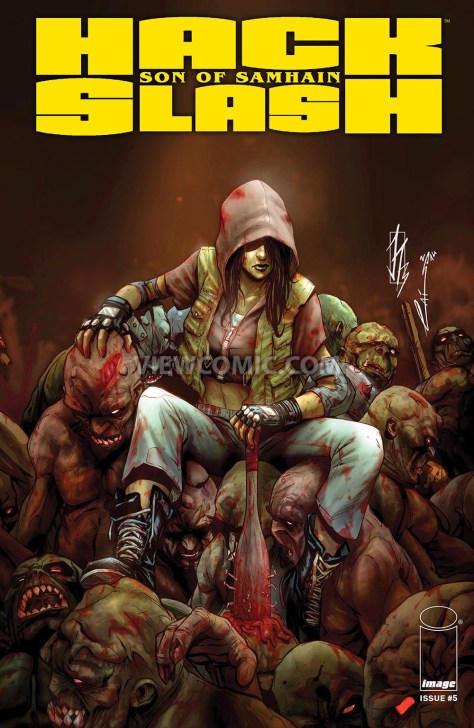
Hack Slash Son of Samhain

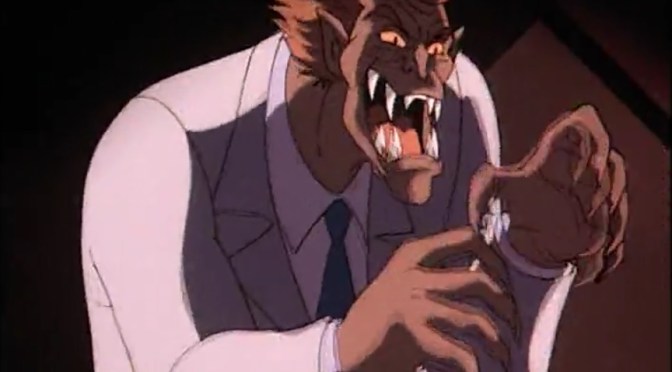
‘Batman: The Animated Series’ Season 1 Episode 2 – On Leather Wings Recap & Review


In the second episode of Batman: The Animated Series we see that someone is setting out to frame Batman, attacking individuals at night while decked out as a flying bat. First instinct says it’d Man-Bat, but another genius crook pulling off such a stunt doesn’t seem to be out of the realm of possibility.

When Batman gets down to the hands on investigation, he makes a mistake in letting himself be glimpsed. Wouldn’t you know it, Bullock is gung-ho and hot on Batman’s trail, obviously convinced he’s the one responsible for all of these attacks.

Through the streets of Gotham he barrels. And… did I mention the vintage look of these cartoons has always been amazing, and one of the true elements that sets this animated Batman series apart from all others? Well, now I have.

Commissioner Gordon shows up just in time to inform Bullock that a pharmacy across town is in the process of being robbed. And, of course, it’s a bat committing such theft, thus proving that Bullock has the wrong guy – no doubt about it.

That’s Bullock for you… being… well, Bullock.

It doesn’t take long for Batman to learn that there’s something shady about Doctors March and Kirk Langstrom. You can bet your batarang he’s going to force the truth from these two in a hurry, just to ensure he keeps his name clear.

It takes but minutes for Batman to catch Langstrom in the act of transforming. And to be real, it’s a pretty damn frightening scene to behold, as the doc undergoes a surprisingly complex transformation before settling in to the role of the Man-Bat as we know him.

The story takes an interesting turn when Batman decides against turning the Man-Bat in to law enforcement, instead opting to bring him back to the Bat Cave, where perhaps something can be done for the man/monster.

Can the doc be saved? Is he doomed to transform for the rest of his days? How will his lovely wife handle the turmoil? Oh the drama!

This is a great episode, and I love that this animated series comes right out of the gate swinging big, looking for the homerun. It’s not some multi-episode, drawn out origin we dive into, it’s all out chaos with plenty of familiar and fan favorite Batman foes. Dissecting this entire series is going to be a blast!

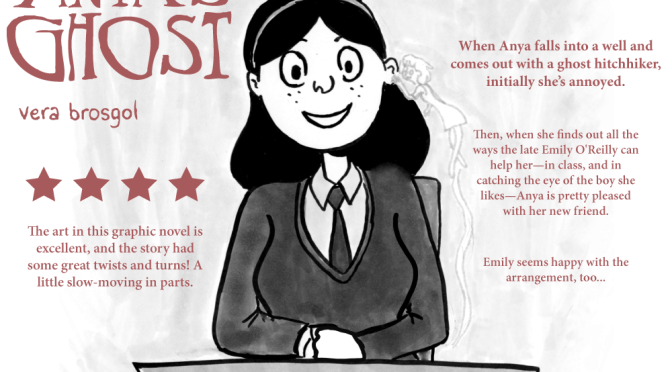
Ike Beal Breaks Down Vera Brosgol’s Excellent ‘Anya’s Ghost’ (Review)


Written by: Ike Beal

The ghost story is one that’s been stagnant over the past decade or so: either the spook or specter is in a place or it’s in a person. After that, the story runs through the motions and generally meets a dim conclusion. While the conventions can be used to great effect in works such as Shirley Jackson’s Haunting of Hill House, it takes an understanding of atmosphere and plotting to pull it off and make it effective. Subversion of the standard haunt is where, in my opinion, the real stand-outs are- stand outs like Anya’s Ghost; a graphic novel that pulls off almost everything it sets out to do with grace and class.

Anya’s ghost is a-typical and fun; coming-of-age sprinkled with paranormal isn’t earth-shattering, but the way it’s done here is special. This is because Brosgol has a deep understanding of her characters, all of which have a level of personality and wit about them; Anya’s depth and character arc is half of why the story works so well. While the arc is typical of an identity politics-laden high school story, Anya herself is natural and her realizations about life well-handled. It’s a shame that she’s one of the few characters that is handled with such care, Emily- the titular ghost- being the only other character in this duet that receives the same kind of depth. Other characters seem only to act as emotional pivots to tell Anya how much she’s changed.

Interplay between Anya and Emily is tit-for-tat the best thing about Anya’s Ghost. Interactions are natural; it really feels like two teenagers are conversing- although Emily could use a more ye-olde colloquial twang to her dialogue. Realism aside, their burgeoning and curdling friendship works wonders and drives the story’s emotional beats effectively.

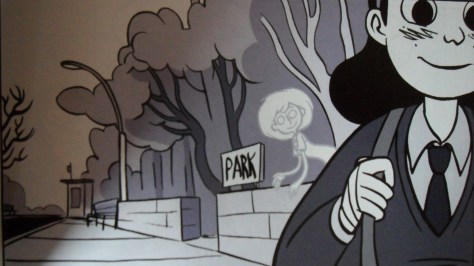
The other half of the appeal is the wonderful art on display. Brosgol’s cinematic angles, conveyance of motion, emotion, and depth, and a lovely use of balanced, symmetrical shots make Anya’s ghost a joy to look at. Dialogue heavy scenes are endlessly engaging, as the dialogue and panels work off of each other without detracting from each other. It’s tough to make dialogue as engaging as the art, but Brosgol does this effortlessly. Couple that with a mastery of light and shadow within the confines of a simple aesthetic, and a color pallet that accentuates the mood, making it reminiscent of an old Hammer flick, and you’ve got something special on your hands.

While being a more-than-worthy read, my biggest grievance with the story is a small piece of lost potential; Anya’s Russian heritage. Issues such as body-image, relationship issues, and teenage rebellion are done with an air of subtlety and tact that I’d have loved to see carried over to the topic of her foreign heritage. Though it was touched on, it’s given little depth beyond a mention in the opening pages. It’s a personal gripe, but the rest of the story is so well-done, it’s a shame it wasn’t better developed.

Anya’s Ghost works wonders as an emotionally packed mellow-drama, and the horror elements let it stand out from formula conventions from both genres it represents. Line art so clean, one could eat off of it is icing on the cake.

Order it here.

Rating: 4/5

Anyas Ghost

Bryan Lee O’Malley’s ‘Seconds’ (Review)


Written by: Ike Beal

A critic generally has two worst-case scenarios: either the work is so boring, so dry and milk toast, that not only is it a trudge to sit through, but it’s neither good enough to breathlessly praise or bad enough to abuse- average is a nightmare. Then, there’s the masterpiece; the work of art so worthy of praise it blows all other peers out of the water effortlessly, excelling in every aspect. How does one do justice to perfection? Today, I deal with the latter.

Bryan Lee O’Malley is a big name in the graphic novels scene, having been responsible for the the six-part rebirth of indy comics, Scott Pilgrim; a work that sang with personality and carved its niche in comic’s history with a punk-rock attitude and style unique to O’Malley. When the series ended, it was difficult to see how one could improve on something so beloved and excellent. In 2014, O’Malley replied with Seconds, the best graphic novel I personally have ever read.

The slice-of-life genre is one well trodden; the last few years especially have given life to dozens of them. Seconds stands out, however, because of its unique style and presentation. Thick, soft line-art gives characters endless personality and expression, lots of characters utilize design short-hands to inform their personalities, but this is never done lazily- every character has some sort of depth, or an element that betrays their design and adds flavor to the narrative.

The color pallet is wonderful, contributing to the mood and running the gamut from warm, rustic browns and reds to the cool colors of winter that contrast and bleed into each other beautifully. Paneling captures movement, comedy, and full-page spreads let dramatic beats breathe easy. Backgrounds shine with detail and expression as tiny bits and pieces move independent of the plot and build a world that’s believable- one that seems to exist even after the book is finished and back on the shelf.

Pacing is well handled for the most part, character beats and big events happen enough to keep things interesting and keep characters reacting and interacting, breeding a wonderful balance of comedy, drama, and existential terror brewing under the floorboards. The fable-like presentation allows the lesson at the end to hit bullseye, the buildup to which is fantastic; a cacophony of insane imagery that builds to a somewhat rushed ending climax; which is strange, since there are times that the story goes without a plot-beat for a bit too long. Other than that, plotting is damn-near pitch perfect.

The shining gem of this story, though, is the protagonist, Katie. Katie is one of the most unique and fleshed-out protagonists I’ve seen in fiction; an eccentric to the end, Katie is relatable, adorable, and driven- pushing the plot forward with her many triumphs and failings as a person that doesn’t want to acknowledge they’re broken. A perfectionist by nature, Katie’s fledgling venture in starting her own restaurant brings with it dozens of headaches and hurdles she wishes she didn’t have to deal with, especially after a breakup with a long-time boyfriend. When presented with an out, Katie takes it, unknowingly making things worse. Her struggle is human, one can’t help but empathize.

While it has a couple dings in it, Seconds is the five-star meal of graphic novels; impactful and substantive, drenched in humanity, artistry, and passion. Seconds not only out-shines all of O’Malley’s previous works, but also shows his endless potential going forward.

Order it here.

Rating: 5/5

Seconds_Cover